
Hawks At Your Bird Feeders
Many people enjoy seeing magnificent birds of prey out in the wild or even in their ya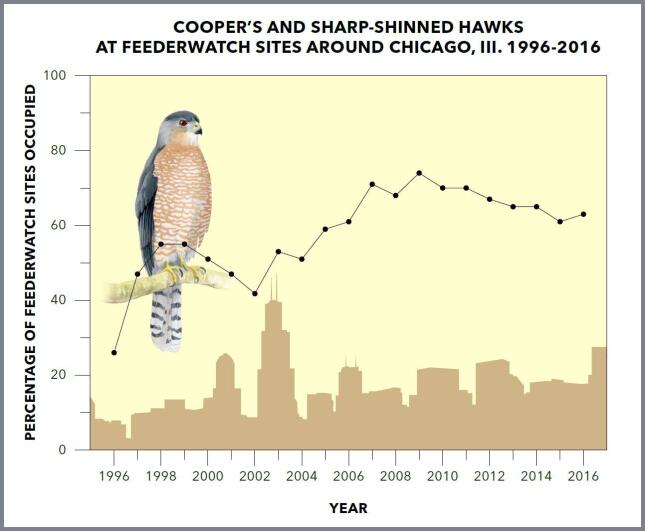 rds. But others do not want to invite songbirds to their feeders only to be attacked and preyed upon. Hawks can be found at backyard feeders at any time of year. However, winter is a time when raptors become more conspicuous. Plus, there are fewer daylight hours and lower prey abundance, so bird of prey are out hunting more intensively. Bird feeders tend to attract an abundance of song birds that can be prey for some raptors. Research from ProjectFeederWatch indicates hawks have become far more common at feeders over the past few decades. In the greater Chicago area from 1996 to 2016, hawk reports at feeder sites more than doubled. The main driver appears to be prey availability—backyards with bird feeders support lots of small birds and small mammals, which attract raptors looking for food. Over time, hawks have expanded from rural forests into suburban and even urban areas, especially where prey is plentiful.
(Data from 554 Project FeederWatch sites in the greater Chicago area showed that Cooper’s and Sharp-shinned Hawks visited 27% of sites (around 150) in 1996, compared with 63% (around 350) in 2016. Graphic by Bartels Science Illustrator Jessica French.)
You might be wondering how songbirds fair with more hawks present now? More hawks doesn’t automatically mean fewer native birds. Research suggests many hawks in towns take invasive species like pigeons and starlings, which can be positive for local ecosystems. They also tend to take weak, sick, and older birds which can actually strengthen the remaining flock.
Common Hawks That May Visit Your Yard:
Cooper's Hawk 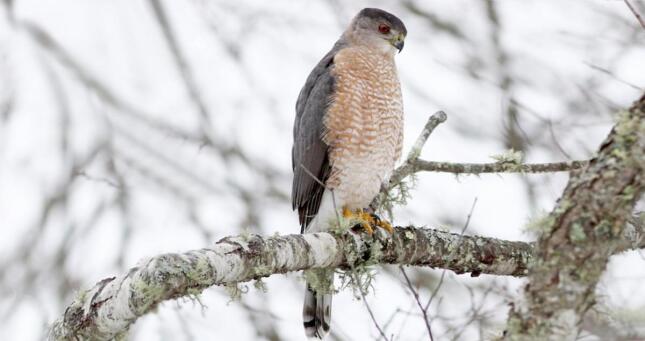
- Mid-sized raptor, about the size of a Crow, about 15-18" from head to tail
- Adults have a blue-grey upper parts and pale-reddish on the under parts and red eyes
- Juveniles have brown upper parts and white under parts with brown streaking and yellow eyes
- The tail reaches well below the wing tips while perched
- Three or four broad bands of dark gray on the tail
- Feeds mostly on small birds and mammals.
Sharp-Shinned Hawk 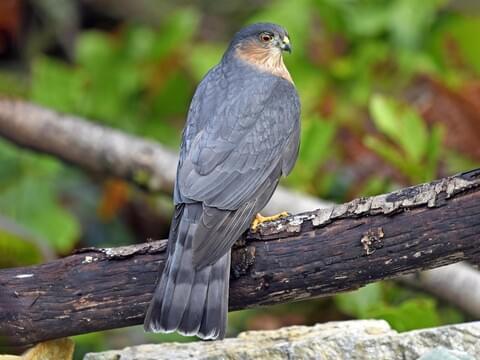
- Smaller (10-14"), but visually similar to the Cooper's Hawk
- Adults have blue-grey upper parts and red-orange bars on under parts
- Juveniles have mostly brown upper parts, thick brown streaking below, and yellow eyes
- The tail has 3 or four bands of dark grey
- Feeds on mostly small birds, but also insects and small mammals
Red-tailed Hawk
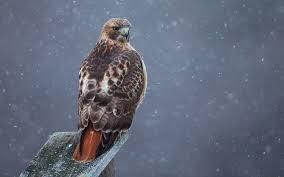
- Large- sized raptor; about the size of a heron, about 17-26" from head to tail
- The tips of the wings just about reach the tip of the tail while perched
- Adults are mostly brown on upper parts and mostly white on under parts with darker wing tips and belly band
- Juveniles look similar to adults, with dark upper parts and white with heavy streaking on under parts
- Adults have red tails, Juveniles have brown tails.
- Feeds mostly on mammals, but will also eat small birds, reptiles, and amphibians
Keeping Song Birds Safe at Feeders From Hawks
It can be frustrating to contend with aggressive birds of prey around your feeder setups, but under no circumstances should anyone ever try to shoot, trap, poison, or otherwise harm birds of prey, which are protected by Federal and State laws. Here are some proven ways to help keep your feeder flock safe from Hawks:
1. Provide Shelter: Providing natural cover for small birds is the best way to protect them from hawk attacks. Dense trees, shrubs, and brush piles are all suitable as natural shelters and should be within 10-15ft from your bird feeders. Having shelter nearby offers a quick get-away if small birds feel threatened. Choose native plants that can provide natural food and shelter- a double bonus! Planting many types of vegitation around the perimeter of your yard provides even more shelter and protection for your feeder flock.
2. Feeder Placement: The right feeder placement may make it more challenging for hawks to hunt in your yard. Placing feeders in covered areas, such as under an awning can prevent hawks from seeing available prey. Similarly, a covered platfrom feeder can provide some visual shielding from circling hawks. Placing feeders in multiple spots in your yard, so that the birds aren't all concentrated together. Ideally, placing feeders on different sides of your house can offer small birds a place to feed out of sight if a predator is spotted near one part of the yard.
3. Avoid Ground Feeding: Birds that feed on the ground are more vulnerable to hawk attacks because they cannot react as quickly to a predator and their options are limited as to where to go. Avoid low feeders or feeding birds on the ground to minimize a hawk's success.
4. Avoid Scaring Hawks: Avoid the temptation to scare away a hawk that has caught prey in your yard. It won't help the caught bird (or other prey) much. But it will force the hawk to hunt again, putting other birds in danger. Instead, close your blinds and wait it out.
Some Other Things to Consider:
- Hunting Runs in Cycles: Hawks prey on the weak, sick, older, less observent birds. The healthier, wiser birds lay low when a predator is nearby. As a result, hunting gets hard enough to where the hawk moves on.
- Appreciate the Beauty of Hawks: Try to appreciate the natural beauty and impressivness of hawks. They are fullfilling their natural role in nature's plan and are an important part of the natural ecosystems.
- Taking Down Feeders: If all else fails, you can always take down your feeders for a few days. This usually makes the birds leave the area and thus the hawks too will leave. It can take several days to weeks to get your birds back after taking feeders down. This can be a double edge sword for birds, especially in cold weather, when they rely on feeders for supplemental food. Of course there is no guarantee the hawk will not return. Once your feeders go back up, the hawks may also eventually return.